





Our work for indigenous people
Health, education, border protection - these are the issues we implement for and with indigenous people
The commitment of TARGET founder Rüdiger Nehberg to people with an indigenous culture and way of life goes back to 1980. Back then, he learned about the oppression of the Yanomami - an indigenous people in the Brazilian rainforest whose habitat was being destroyed by gold prospectors. Disguised as a gold prospector, he collected evidence of the injustice done to the Yanomami. And he drew public attention to the issue - including with spectacular Atlantic crossings.
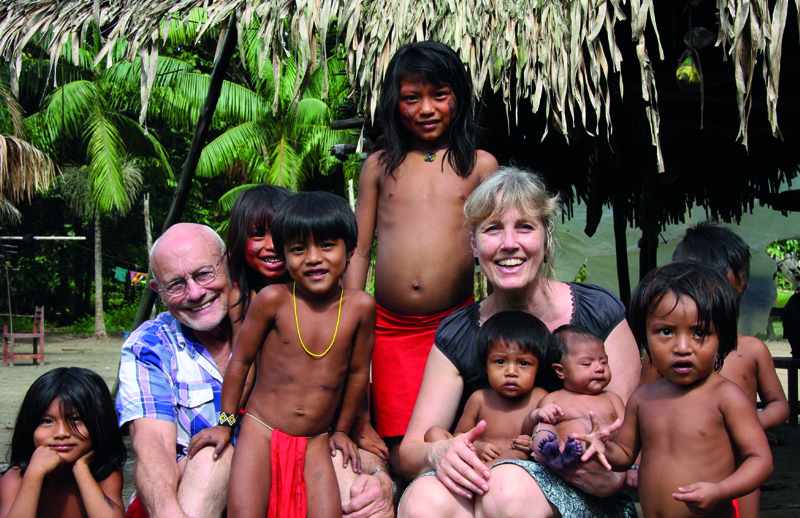
Rüdiger Nehberg and Annette Nehberg-Weber with indigenous children
This commitment is still the basis for the work of TARGET e. V., the association founded by Rüdiger Nehberg and his wife Annette, for health, education, border protection and thus the protection of the original habitat of indigenous peoples in South America. Even today, there are powerful influences, such as those of the agricultural industry, whose struggle for arable land poses a major threat to the territories of indigenous peoples.
Helping these people to preserve their homeland is the legacy of Rüdiger Nehberg and the task that the Roman, Sophie and Annette Nehberg family tackle every day with TARGET. The couple took their son Roman and daughter Sophie to the Amazon jungle early on during their summer vacation. Today they are on the board of TARGET e. V.
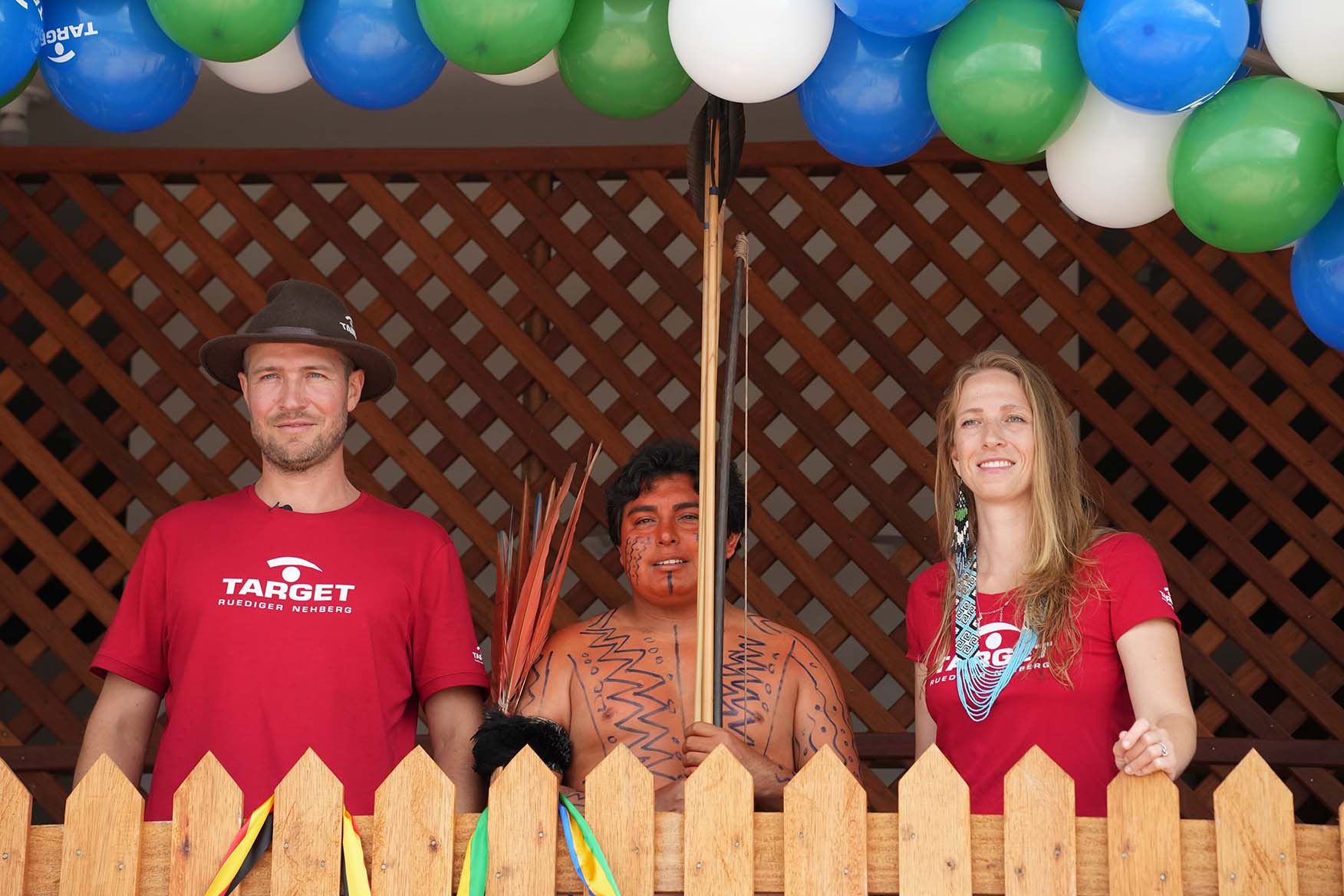
Roman, Sophie at the Waiãpi
Thanks to an extended cooperation agreement that TARGET has with the Brazilian Ministry of Health, TARGET e. V. can now officially become active with all indigenous peoples in Brazil. The focus is on improving healthcare by building and operating health stations in the protected areas. The principle: TARGET e. V. builds and maintains health stations, while the Ministry of Health supplies medicines, equipment and medical staff. A cooperation that supports the lives of the indigenous people on the ground.
TARGETs Projects in Brasil: